
Why the Infinite Game Mindset Changes Everything
Nonprofit work often feels like a series of finish lines.
The end of the fiscal year.
The next campaign.
The grant deadline.
The enrollment target.
The gala.
The board report.
We move from one high-pressure moment to the next, celebrating a “win” before immediately bracing for the next challenge. It’s exhausting—and it can quietly distort how we make decisions.
But here’s the uncomfortable truth:
Nonprofits are not playing a finite game.
There is no final scoreboard.
There is no moment where the mission is “complete.”
There is no permanent victory lap.
Nonprofits exist to serve missions that are bigger than any campaign, any leader, or any moment in time. That makes nonprofit work an infinite game—one where the goal isn’t to win, but to keep going, keep adapting, and keep making an impact for generations to come.
Finite Games vs. Infinite Games
In The Infinite Game, Simon Sinek draws a clear distinction:
Finite games have known players, fixed rules, and a clear endpoint. Someone wins.
Infinite games have evolving players, changing rules, and no finish line. The goal is to keep playing.
Most nonprofit leaders know this intellectually. But under pressure, we often act as if we’re playing a finite game.
We optimize for:
Short-term metrics
Immediate outcomes
This quarter’s results
This year’s budget
Those things matter—but when they become the primary lens for decision-making, they can undermine the very mission we’re trying to protect.
Why Nonprofit Work Feels Finite (Even Though It Isn’t)
The structure of nonprofit life pushes us toward finite thinking:
Annual budgets
Grant cycles
Board terms
Strategic plans with end dates
Campaigns with clear targets
These structures are necessary. But they’re tools—not the mission.
When we confuse the tool for the purpose, we risk making decisions that:
Burn out staff
Alienate donors or members
Dilute our message
Trade long-term trust for short-term relief
You might “win” the moment—while quietly losing the future.
The Cost of Playing a Finite Game in an Infinite World
When nonprofits adopt a finite mindset, warning signs start to appear:
Marketing becomes louder, not clearer
Fundraising becomes transactional, not relational
Engagement becomes about attendance, not belonging
Innovation feels risky instead of essential
Most dangerously, organizations begin to ask:
“What do we need to do right now to survive?”
Instead of:
“What do we need to build so we are still relevant, trusted, and impactful ten years from now?”
Survival matters—but survival alone is not a strategy.
What It Means to Play the Infinite Game as a Nonprofit
Playing the infinite game doesn’t mean ignoring results. It means contextualizing them.
Infinite-minded nonprofits:
Prioritize trust over attention
Value relationships over transactions
Design for adaptability instead of perfection
Measure success not just by outcomes, but by resilience
They ask different questions:
Are we building something people believe in?
Are we strengthening relationships—or just extracting value?
Are we making decisions that future leaders will thank us for?
This mindset creates organizations that can weather leadership changes, cultural shifts, funding fluctuations, and generational change—because they are rooted in purpose, not panic.
What Imagineers Understand (That Nonprofits Can Learn From)
Great theme parks are never “done.”
They are constantly refined, reimagined, and improved—not because they failed, but because relevance is an ongoing commitment. The goal isn’t to build something once. It’s to create experiences that endure.
Nonprofits should think the same way.
Your mission deserves more than short-term wins.
It deserves thoughtful design, intentional storytelling, and systems built for longevity.
What Comes Next
In this series, we’ll explore what playing the Infinite Game looks like in the core areas of nonprofit work:
Marketing & Communications: Why trust outperforms attention over time
Fundraising: Why relationships matter more than revenue goals
Member & Community Engagement: Why belonging beats attendance
Because the question isn’t:
“How do we win this moment?”
It’s:
“How do we build something that lasts?”
Ready to Start Thinking Long-Term?
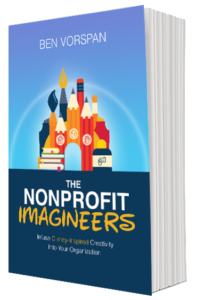
At The Nonprofit Imagineers, we help organizations shift from short-term fixes to long-term design—so your mission can thrive not just this year, but for years to come.
Ready to get started?
Let’s imagine what your nonprofit could look like when it’s built for the infinite game.
 Winter Savings!
Comments are closed